Egg-ucation
Read below to find out some awesome facts about duck eggs, chicken eggs, and why our “producks” are so tasty and good for you!
Khaki Campbell Duckling information is included at the bottom!

Why Should I Eat Duck Eggs?
Duck eggs are a nutrient-dense option for cooking and eating. They have a richer taste and ounce for ounce a higher protein content than chicken eggs.
Superior Taste & Texture: Duck eggs are known for being unusually creamy and rich, making them highly prized by chefs and bakers for richer flavor and better emulsification in cakes.
Centuries Long Tradition of Use: A natural, traditional food, duck eggs are frequently used in Asian markets.
Higher Nutritional Value: They contain more omega-3 fatty acids, protein, and iron than chicken eggs. They also provide antioxidants and significant amounts of vitamins (all B vitamins, Vitamin D). And they provide the “good” fats that you want for your cholesterol.
Baking Performance: Due to a higher yolk-to-white ratio, they make cakes and pastries fluffier and richer.
Allergy-Friendly: Many individuals with chicken egg allergies can tolerate duck eggs. (Always check with your doctor to confirm this is a good option for you).
Longer Shelf Life: Due to a thicker shell, they often last longer in storage than chicken eggs, in many cases 3-4 months.
Taste: Eggs, from any source, pick up the flavors of the feed the animal is fed. Our ducks eat a good layer feed and then free range for bugs and plants. You will not get any fishy, or muddy, taste from our duck eggs. They will, however, taste creamier than chicken eggs.
Differences between our eggs and store bought eggs
For both our chicken and our duck eggs, you may find that the yolk is much darker than you are used to, from a light yellow to a deeper shade, almost to a golden orange. All our girls get a good layer feed. They have large runs with lots bugs and plants to eat as they choose. We give them additional treats like sprouts, clover, and garden leftovers too. These extras can really improve the color and flavor of the yolk.
You will notice that every shell is unique and they have a lot of different features. Bumps, ripples, color variations, calcium deposits, thickness, it’s all good. It just means we have a variety of hens laying eggs for you.
Egg size varies too. Most of our girls lay pretty large eggs, but from time to time we will have smaller ones. You will likely get a variety of sizes in your carton.
Advice from our own World-Class Trained Chef
How to start using duck eggs if you don’t want to make an immediate switch:
Start with Baking: The easiest way to transition is using them in muffins, cakes, or cookies where the texture difference is not as surprising.
Mix with Chicken Eggs: For scrambled eggs, mix one or two duck eggs with chicken eggs to ease into the richer, more robust flavor.
Highlight Culinary Versatility: Try them in custards, omelets, and fresh pasta for a more luxurious texture.
Steam-Frying: When frying, use a bit of water and cover the pan to ensure the whites remain tender rather than rubbery.
***Subscribers, be on the lookout for more tips and tricks from our chef in your upcoming egg deliveries!
All About Our Ducklings!
Read this to find out why our female Khaki Campbell ducklings would be a great addition to your farm!
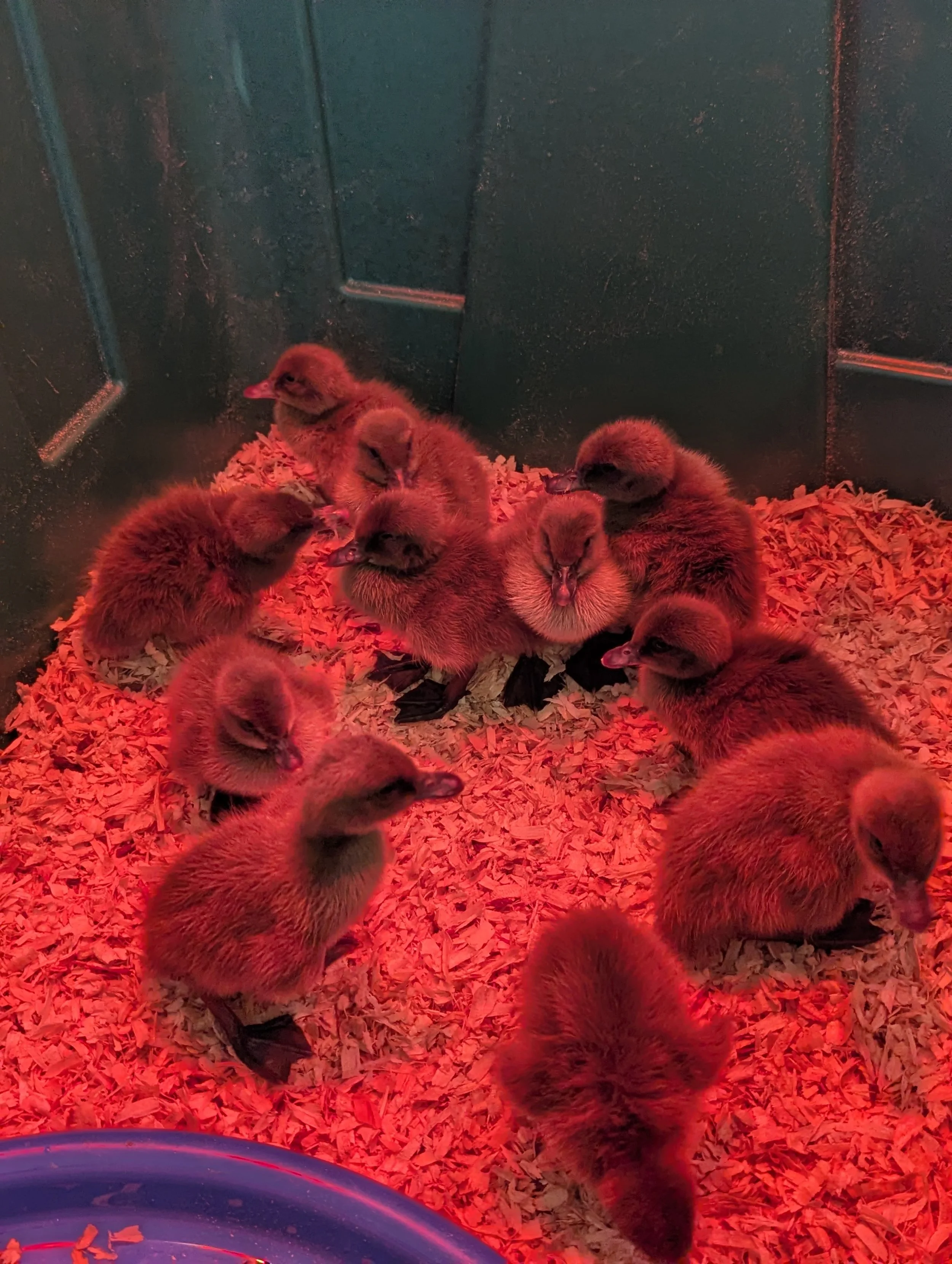
What is the difference between buying our ducks vs buying from a farm store?
Higher Survival Rate! We raise our ducklings through and past the critical period, keeping a healthy, low-stress environment for them as they grow. Typically, ducklings have a 50% survival rate through their critical period, but we are happy to announce that we have maintained over a 90% survival rate for each group of ducklings we raise! They are regularly checked for common duck diseases, given plenty of space to forage for bugs, and fed a high protein diet that ensures they grow up healthy and happy!
Already socialized! By the time the ducklings arrive to your farm at 6 weeks or older, they are already friendly with humans and other ducks! They get pampered with treats such as raisins or peas every once in a while, so they love humans! Please do not put young ducks with drakes until they are at least 20 weeks old!
Already have a bedtime routine! One of the biggest things our customers love about our ducks is that we train them to already have a bedtime routine prior to arriving at the customers’ farm. Ducks love routine and you won’t have to worry about wrangling them every night to go in their coop! Check out the video of our staff and ducks reacting to their “Bedtime” song below!
Why only Females?
Eggs – males don’t produce eggs (and aren’t needed for the females to lay eggs).
Many people that have females don’t want to sell them due to their prolific egg-laying capabilities and recommended female to male ratio, so there is a huge absence of available female egg laying ducks in our area. You need a much higher ratio of females to males as males can (and will) cause injury to the females during mating season, so you need to have 4, 8, 10 or more females for every male so that he can “play the field”.
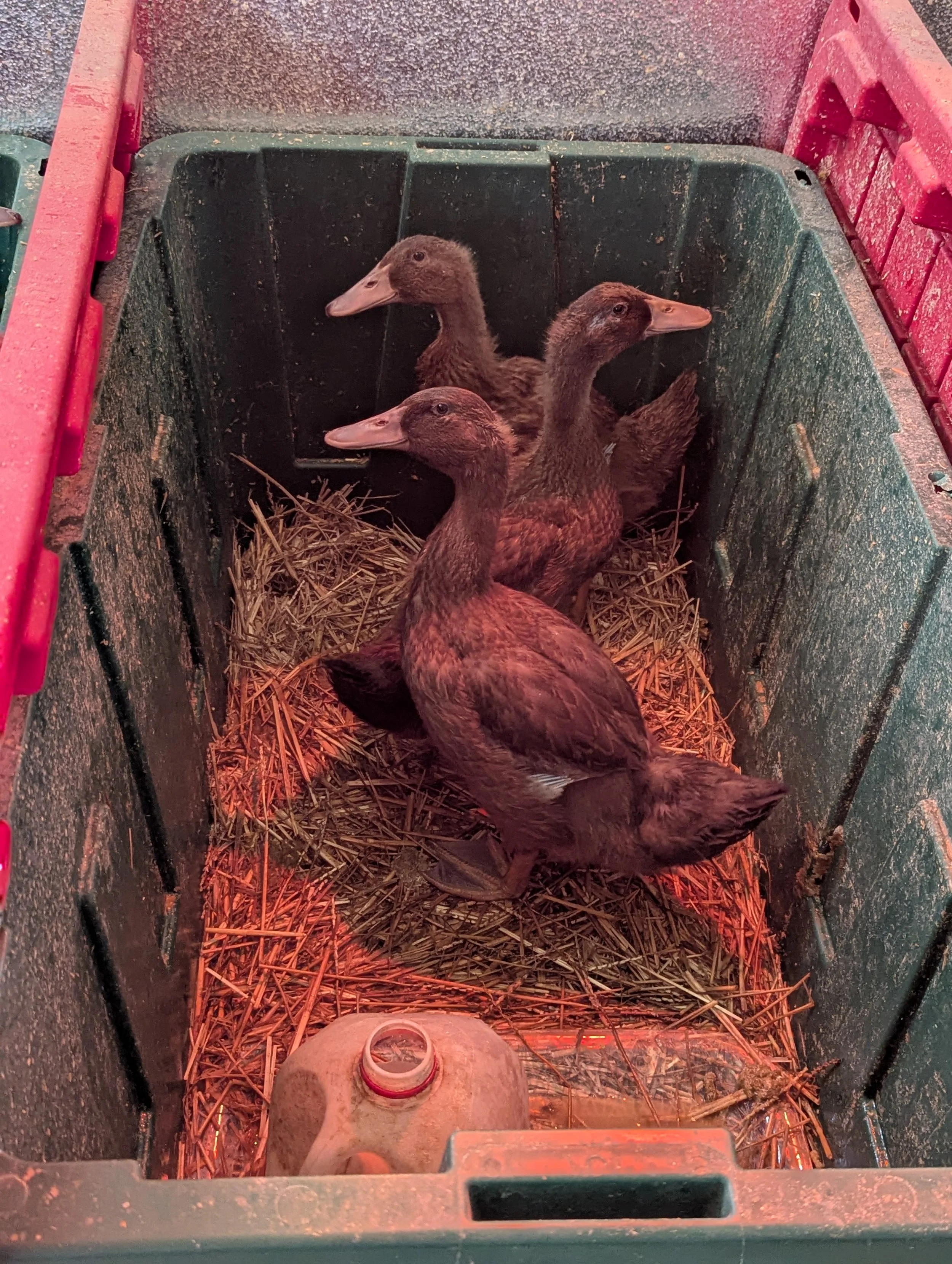
Why Khaki Campbells?
Khaki Campbell duck eggs are delicious, make fantastic high rising baked goods, sometimes are able to be eaten by folks who are allergic to chicken eggs. They are one of the most prolific egg layers in the duck world, laying between 250 and 350 eggs a year!
Why do they need to be 6 weeks old before we sell them?
The first five weeks are the most risky time for ducklings. We are set up to handle the risk. Our brooder area is kept clean and controlled so that no disease is introduced and the ducklings have the best start in life. We have experience in what to feed, how much to feed, when to change the feed, etc. After five weeks (or thereabouts) the ducklings are feathered out and generally can handle outdoor temps. All you need to do once you receive your ducklings is provide a secure duck hut, food, water, and lots of dry warm bedding.
Additionally, by this age we have had time to get the duckling acclimated to humans, their voices and touch, so that they are not as skittish and are easier for you to handle. With us raising them to five weeks, we take the risk off your shoulders, allowing you to have happy, healthy ducks!
Why delivery only?
We control access to the farm for biosecurity. While ducks are often less susceptible to diseases than chickens, they can still get varying illnesses. And these can be transmitted on clothing and shoes. By limiting who has access to the farm, we reduce the chances of introducing disease. This helps you feel confident you are getting healthy birds. (We keep our ducklings separate from our adults for the same reason). This is also why we don’t allow visitors to come to the farm.